A matter of philosophy

I would like, briefly, to shoot the breeze, starting with a summary of three very old and more or less pessimistic points of view about people.


In De Civitate Dei, St Augustine argued that authority exists to restrain what Hobbes would later call the “war of all against all.” People, in short, were usually up to no good and had to be policed.


Thomas Aquinas, by contrast, argued in Summa Theologiae that the first precept of natural law was that ‘good is to be done and pursued, and evil is to be avoided.’ So man, created to attain his end, naturally tends toward good.


In Defensor Pacis, his treatise of 1324, Marsiglio of Padua argued that men had to assemble together for this common good but were prone to conflict and therefore needed to be governed.

If we were to apply these to the assurance of quality in education, we might see a spectrum of approaches to inspection.

a) In an Augustinian model, schools need snap inspections, rigorously undertaken because, naturally, they will do whatever they can to avoid being considered inadequate and will do anything for ‘outstanding’.

b) In a Marsiglian model, schools want the best for their pupils, but are in competition with each other and need an impartial arbiter. Some you can trust, but some need policing.

c) If we pursue a Thomist view, however, schools can be trusted to improve themselves and each other, for the betterment of their pupils.

Inspection seems to have wavered somewhere between a) and b). I would like to imagine, with somewhat starry eyes, a situation where c) were possible, where schools would seek not merely to be above average but desire the overall improvement of education.

What if we could stop competing with each other as if education were a nationwide Hunger Game? What if we could take the best principles of peer working that have been adopted within schools and apply them to groups of schools? And what if we could look on, say, an annual review by peers from other schools as a supportive health check? It would require a huge change in our attitudes and perceptions.

I would like to imagine that one day all schools could benefit from peer reviews. I can see no reason why Ofsted-led assurance and peer-led improvement shouldn’t coexist, just as Church and State did for our three philosophers.

For the time being, I will watch and learn. I will give Andrew Morrish, someone far more experienced than I am, the final word, as our starter for ten…


“I very much see [peer review] as the way ahead for inspection, especially for those outstanding schools that are now exempt. As I see it, one of the many advantages … is that you feel as a headteacher that good has been very much done unto you. It is system-led and impact driven, focussing entirely on the core purposes of education. If we can avoid the pitfalls of the cosy-fireside-chat syndrome, then in terms of doing good, peer review is here to stay.”

On Nonsense

Stuart Lock got me thinking about PGCEs. I have one and, after twenty years of work in a cynical, pragmatic, highly political and often unimaginative environment, I needed the ‘head space’ in which I could dream of what I might become and the stimuli – however theoretical or fanciful – for developing my own practice.

And, because I’m so up my own fanciful backside, my response came out poetically (I must admit to having achieved a C grade in GCE General Studies for a response which was written in blank verse while I was quite hammered after a morning at the pub).

I set off for my
teaching practice,
pockets packed
with nonsense,
belly filled with froth
by Fellows far from
where I’ll find myself
this winter morning.
But, without these fancies,
what have I to feed
my daydreams?

On Happiness and Heads

An aside, in response to Andy Cope’s exhortation to Head Teachers to be happy. I came into teaching in search of true, deep happiness. Here is my appraisal.

Inside me

I’m happy. I’m a naturally upbeat person, likely to see the best in someone or a situation, often naively. I experience sudden surges of joy, from a thought, from a memory, from an idea, sometimes just because.

In my classroom

In the playground, at lunch, in the corridor, wherever I encounter children, they make me happy – for many reasons.

Seeing my pupils in the playground, about to walk into my classroom, fills me with joy every day. Listening to their excited recounts of Last Night as they hang their coats and bags up gives me a warmth inside. Feeling the buzz of a lesson when it’s just hit that sweet spot of enthusiasm, where someone says, “Ah! I’ve got it!”, where we collapse in uncontrollable giggles, where the conversation suddenly gets more profound than I ever thought possible, where the hairs on my arms rise at what I am seeing or hearing: all of these things and more make me happy.

In the staff room

I love listening to colleagues, watching them interact, hearing them talk about their pasts or their lives outside teaching, seeing the shared looks across the room, hearing them laugh.

Working at happiness

Happiness may also require a little conscious thought and hard work. 

I am a strongly expressed extrovert. If I’m too long or far from a source of energy and enthusiasm, I can find adversity or others’ apathy difficult to deal with. Children, by and large, are little Duracell batteries of emotional energy, which is also why they make me happy. 

I value and seek out more introverted colleagues (in the Jungian sense of the word) when I need a happiness boost, a reality check or just some reassurance. I always have done, and have been lucky enough to have had at least two bosses who were my mirror opposites (great if you acknowledge and understand it; a nightmare if you blunder around unaware).

I know what gives me a quick fix, be it chocolate, a menial but oh-so-satisfying task, a favourite memento or just a thought. Apologising makes me happy: the acknowledgement of wrong, the release of guilt, the exchange of power (giving it away) and the typically positive response to an unexpected and unsolicited “Sorry”. Telling someone how good something they’ve done is makes me happy, for obvious reasons that seem to escape some people. And talking to the right people helps – not just introverts but a mutual support network of friends.

I know that however bad a situation is, it is likely to get better and, even if it is as bad as it can be, I won’t suffer permanently or unbearably. So far, at least: I don’t kid myself, which also means that I can trust my inner voice that tells me that I will be happy again.

I know places and conditions that will top up my energy and make me happy: mountains, a literary festival, a country walk, the window seat in a streetside cafe, a gig or music festival, a hack on horseback, really good ballet, a crowded market or station concourse, a sharp and incisive intellectual discussion, a high building, familiar places. If I can, I go there or anticipate them. Or I find their near equivalent within the school (the playground on a sharp, blustery morning, a bustling lunch session, the crowded staff room, my empty classroom resonating with a Tallis motet).

So I make conscious choices to be happy, based on what I know about myself. But not to acknowledge unhappiness, not to allow it a place beside me and address its causes, is dangerous.

When happiness is hollow

Happiness has to have deep roots. I’m a happy person because I know myself better than ever, am now true to myself and finally like myself, just as I am. I’m happy in my classroom because I deeply love and value children, and learning, for its own sake. I’m happy in the staff room because I like people. These are my starting conditions. I’ve also listed and described my strategies for maintaining happiness.

I have spent my entire adult life (and a bit of my childhood) looking at leaders. I don’t feel much of a need to lead, though I have done from time to time. What I want is situational leadership: someone who possesses the attributes, awareness and acumen to judge, adapt to and ultimately influence the mood of their organisation. And because I watch the little details, look for longer term trends and weigh up what it all means for them, for us and for me, I want my leaders to be authentic.

I do some occasional work with troubled teenagers. There are more capable volunteers than me, so I often gravitate to the parents. I watch their expressions, listen to them, then ask them, “Who’s caring for you?” More often than not, they say, “That’s a good question,” smile sadly, look somewhere I can’t see and switch to a more soluble problem.

I also worry for Head Teachers. Their accountability is crushing, their motivation is often altruistic, their work habits are gruelling, their environment is shifting and they have insufficient control over the variables that affect the performance of their schools.

If leaders can draw on their inner attributes, their strategies and their self-awareness to express genuine happiness, then I will share it. If I don’t believe the smile on their face, I’ll think less of them for it. But most of all, if I suspect that their outward happiness isn’t sustainable, I ask myself, “Who’s there to help the Head?”

Help our Heads

I have an idea: let’s acknowledge our shared humanity, our common frailty, our mutual need for happiness and help each other. It should be in all our job descriptions, not just the Head’s.

‘Suitable Attire’ Part Two – University 

Thank goodness that there were no digital cameras in 1982. University was where many of those who resented their dull school uniforms got to experiment. For others, it was time to exchange one uniform for another.


Being different, just like them


Being like them to be different

Experimentation

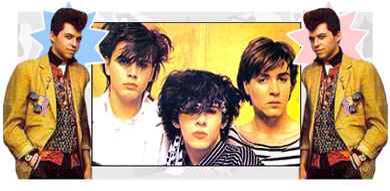
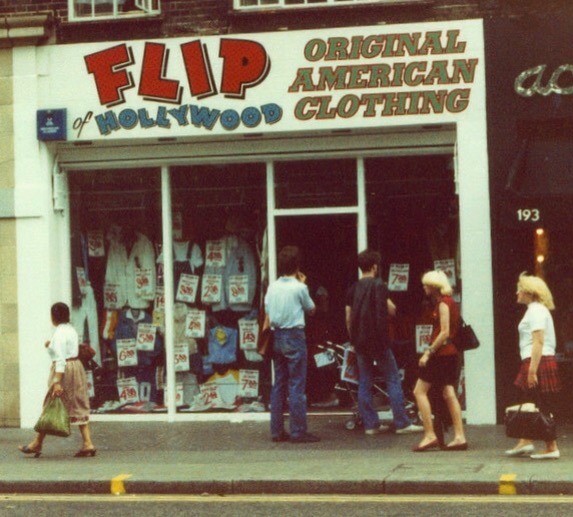
And boy, did I experiment.  ‘Flip of Hollywood’, a pricey purveyor of second-hand, garish American tat, saw a lot of my grant money.

  
Flip, Long Acre, 1981

Out I walked on one occasion with loud stripey trousers, a turquoise jacket with green buttons, some sort of shawl, pixie boots, braces: crimes against taste, even at the time.  

Further education was and, I hope, still is a time and a place for reinventing and exploring oneself. What might have been confined to evenings or weekends exploded – or, rather, sidled, somewhat hung over – into lectures, libraries and seminars. And, strangely, people learn a lot there. So my first question might be why we expect younger learners to dress like grown-ups when they – or their parents and grandparents – may dress like taste-blind toddlers at university.

But if I turn to the lecturers, I recall a more conventional, blander picture. Suits, sweaters, skirts, ties, blouses. Would it have made a difference if they had been outrageously outfitted? I suspect not. Certainly not for me, as I craved ideas and arguments, regardless of their wrapper.

Conformity and Transformation

Further education involved forming new associations. In my first year, when I wasn’t cavorting in a sub-Boy George ensemble, I was rowing. In my second year, I played rugby. We had our corner of the Union bar, we had our songs and our jokes, and we had our uniform: jeans, rugby jerseys and sweatshirts. Practical, unobtrusive but a uniform no less. We – I – fitted in with the group.

One shameless act of uniformity – or abuse thereof – stands out. A friend and I joined a coachload of middle-aged members of the East India Club for a trip to the Varsity Match at Twickenham. We thought the bar on the coach was free, so together we drank five bottles of claret and countless gin and tonics. Staggering around at the match, we saw a hospitality tent offering more drink. So we walked up and ordered. Of course, we had no right to be there: it was a business event, hosted by Shell. An irate older man came over and asked us what we thought we were doing. I opened my mouth to burble an excuse when his eyes dropped to my neck. To my tie, to be precise. “Oh, you were at Bedford. My son was there. Have another drink.” Drunk, stupid and young as we were, we thought this was great. What I wore mattered.

In the same year, I discovered the Officers Training Corps. Having gone AWOL from the RAF cadets at school, I wouldn’t have expected to want so much to conform. I’d tried to lose myself by enlisting as a squaddie, but the recruiting sergeant told me to pack myself back to university and try to become an officer. It was here that I saw and participated in acts of transformation.

This was the age of the Sloane Ranger. Peter York and Ann Barr made public the dress and rituals of a certain type of man or woman about town. And we had a few genuine Sloanes, people whose folks really did own a large chunk of Norfolk, say. But for most of us, it was a more or less rapid and stealthy metamorphosis. Or, more correctly, a mimesis because we wore but we weren’t. From head to toe, we re-dressed ourselves, drank, spoke and sang in different ways. Most of us, I expect, actually came to believe in the personas that our outward appearances signified. I certainly did, for a while.

Someone I knew, a friend in Special Branch, told me that you could spot an off-duty policeman by his casual attire: leather jacket, slacks, open neck shirt and smartish shoes. We, the would-be warriors, had our off-duty uniform. The night my wife met me (she was a student as well) I was with two friends. 


James, me, Dick

Her photograph shows how conformist we were: striped shirts and Guernsey sweaters (you can’t see the matching jeans and brogues). Underneath, we were very different. Dick was quite seriously mad, James was besotted with the army and I was…

Searching for meaning and identity

I believe that this self-fashioning is an important aspect of further education. We leave home, we increasingly separate ourselves from our families, we form new associations. If it is conscious play, experimentation, it can be valuable, the ultimate extension of Early Years learning through dressing up. But some of us lurch from one institution to another, each with its uniform. Personally, I wish I’d had more scope to experiment with and explore my self before I turned up in Mile End Road. It would take years before I stopped hiding behind my costume. 

This generation feels far more pressure to conform than we did; I think we do a disservice to young people if we unduly or unthinkingly emphasise uniformity.

‘Suitable Attire’ Part One – Schooldays

I remember talking to a birthright Quaker, when I was still flirting with the idea of becoming a member. “Birthright” means that she was born into and brought up in the Religious Society of Friends. “As children,” she told me, “we used to play a game on coaches to London. We’d play ‘Spot the Quaker’. We could tell them by the way they looked. Sensible shoes. Sensible clothes. Women with sensible haircuts.” Looking round Friends House, I could see what she meant. This is ironic, because I can think of few groups where explicit rules and conformity play a smaller part. We’re a bloody-minded, idiosyncratic bunch: no one tells us how to dress; it’s just part of our lived testimony of simplicity, I suppose. And while I can do ‘simple’, the dandy in me sometimes has to share the stage.

In four separate posts, I will look at the role of attire in my own schooldays, my time at university, my business career and in my vocation as a teacher.

Finally, and in the fifth of the four posts, I am going to advocate an approach to school attire that suits me as comfortably as the well-worn navy Boden shorts I slouch around in, or my favourite Pakeman, Catto and Carter navy serge suit. It is based on forty years of conscious clothes-watching. And if it’s not right for you, who am I to judge?

Pre-history

I need to mention my grandfathers. All three of them (you will gather by now that I am creative with my maths) wore a uniform in their career. My identity was marked by their example, in many ways.
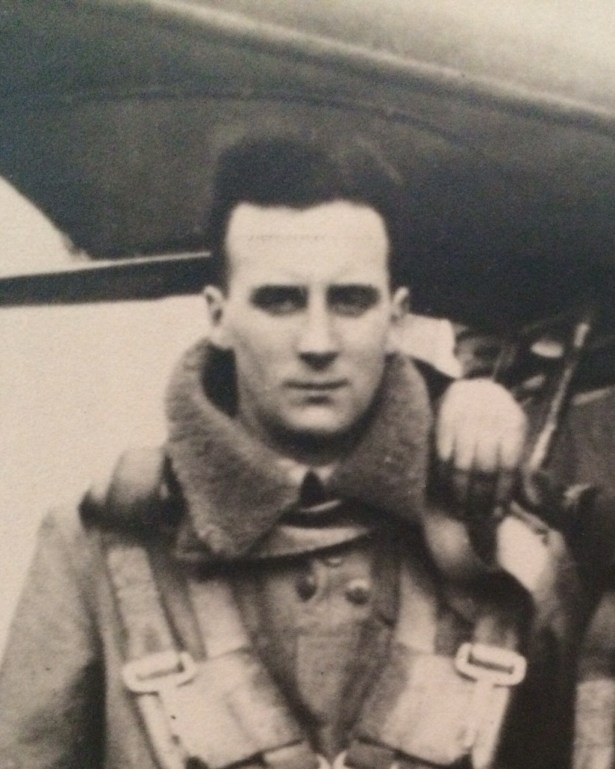
  
Pilot Officer Joseph Unsworth DFM was killed in action in 1941. My grandmother married again, a Flight Sergeant. 

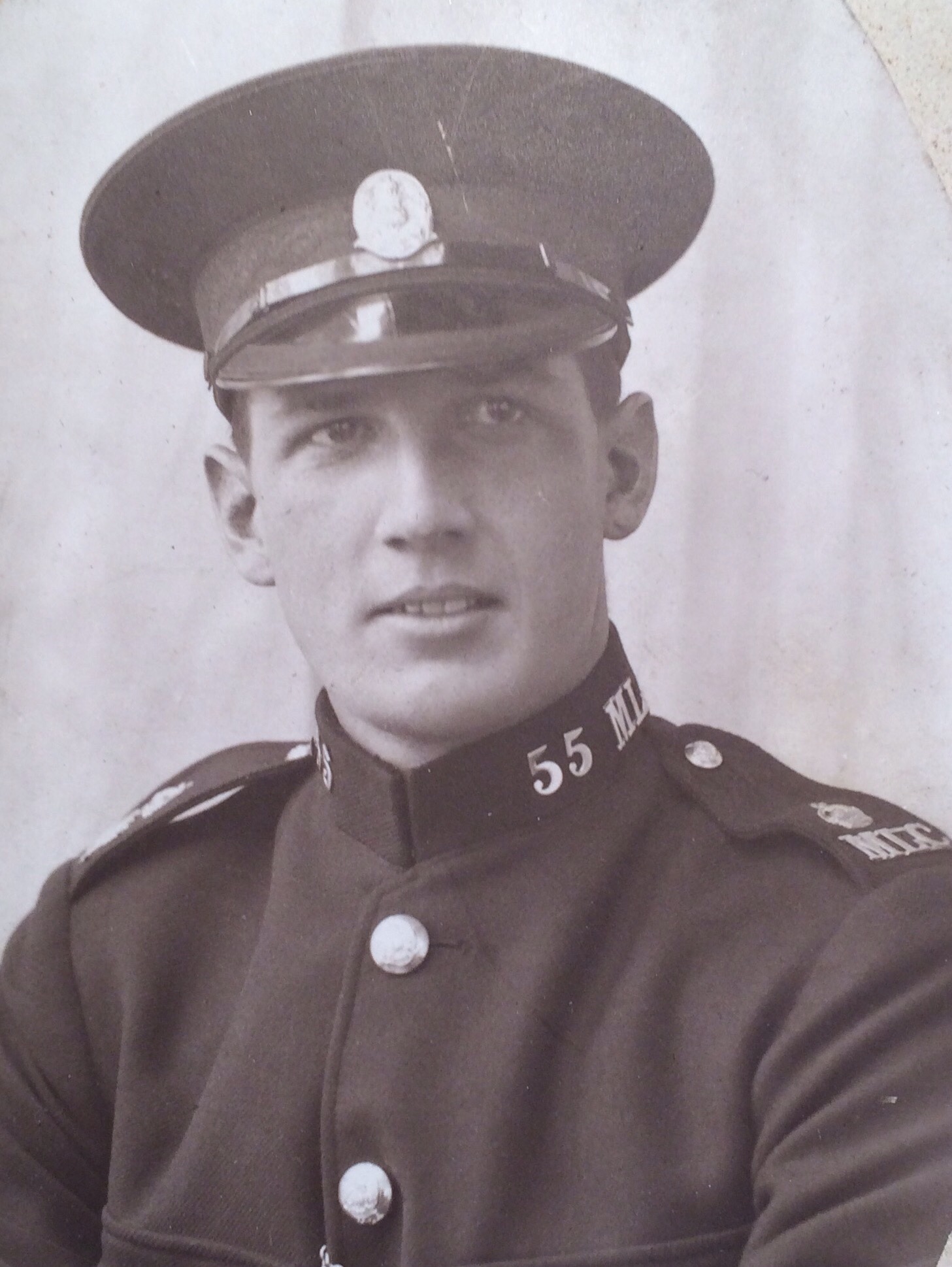
  My father’s father was a policeman.

Pakistan

My first memory of a teacher’s attire was Mrs Malick, in Lahore.    

  Mrs Malick, beside our tonga.

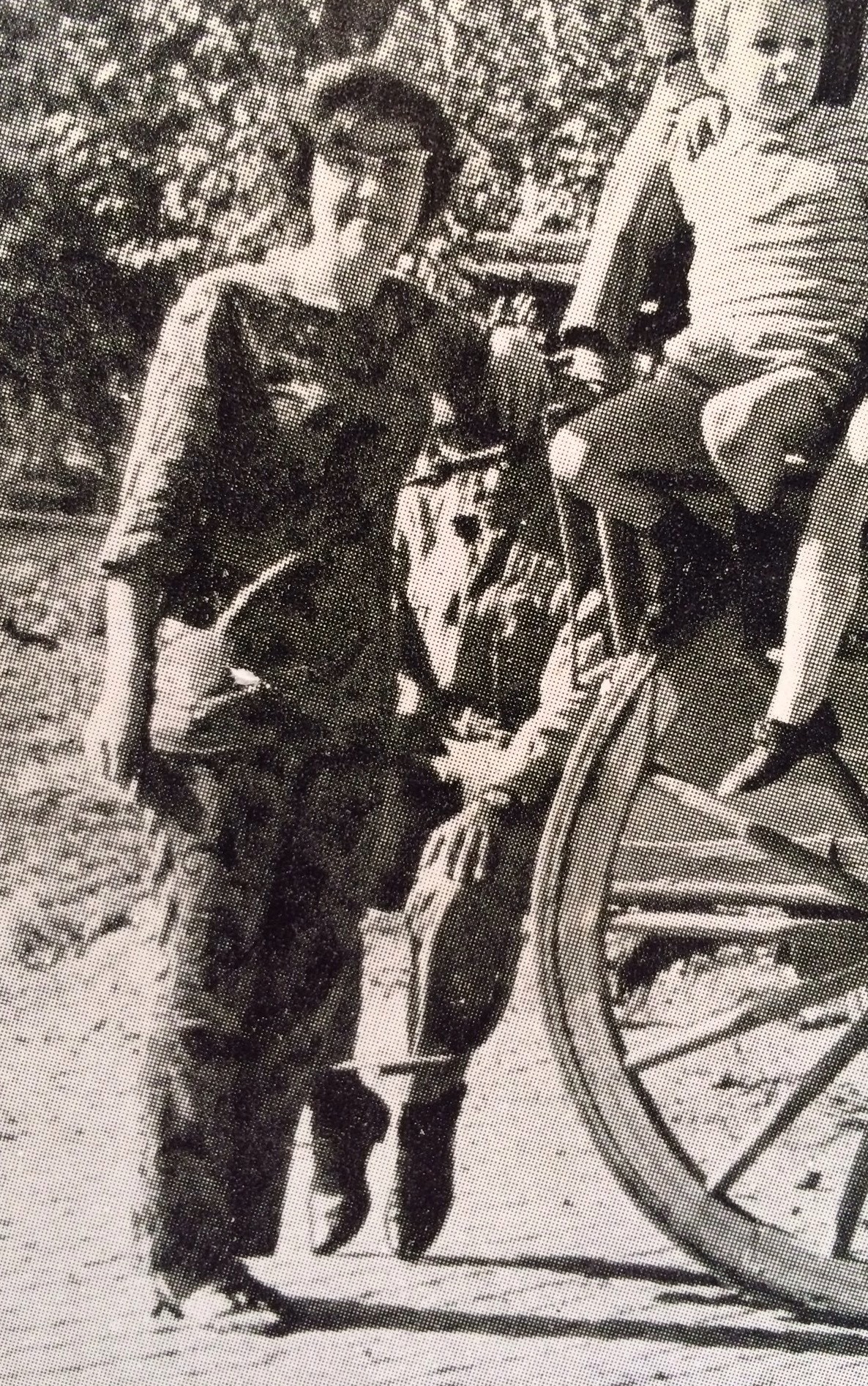
I was in second grade.  The English wife of a Pakistani man, teaching at an American school, she wore modest, Pakistani clothing. Judging by the photograph, she looked smart, though I remember her manner and bearing far more than her clothing.

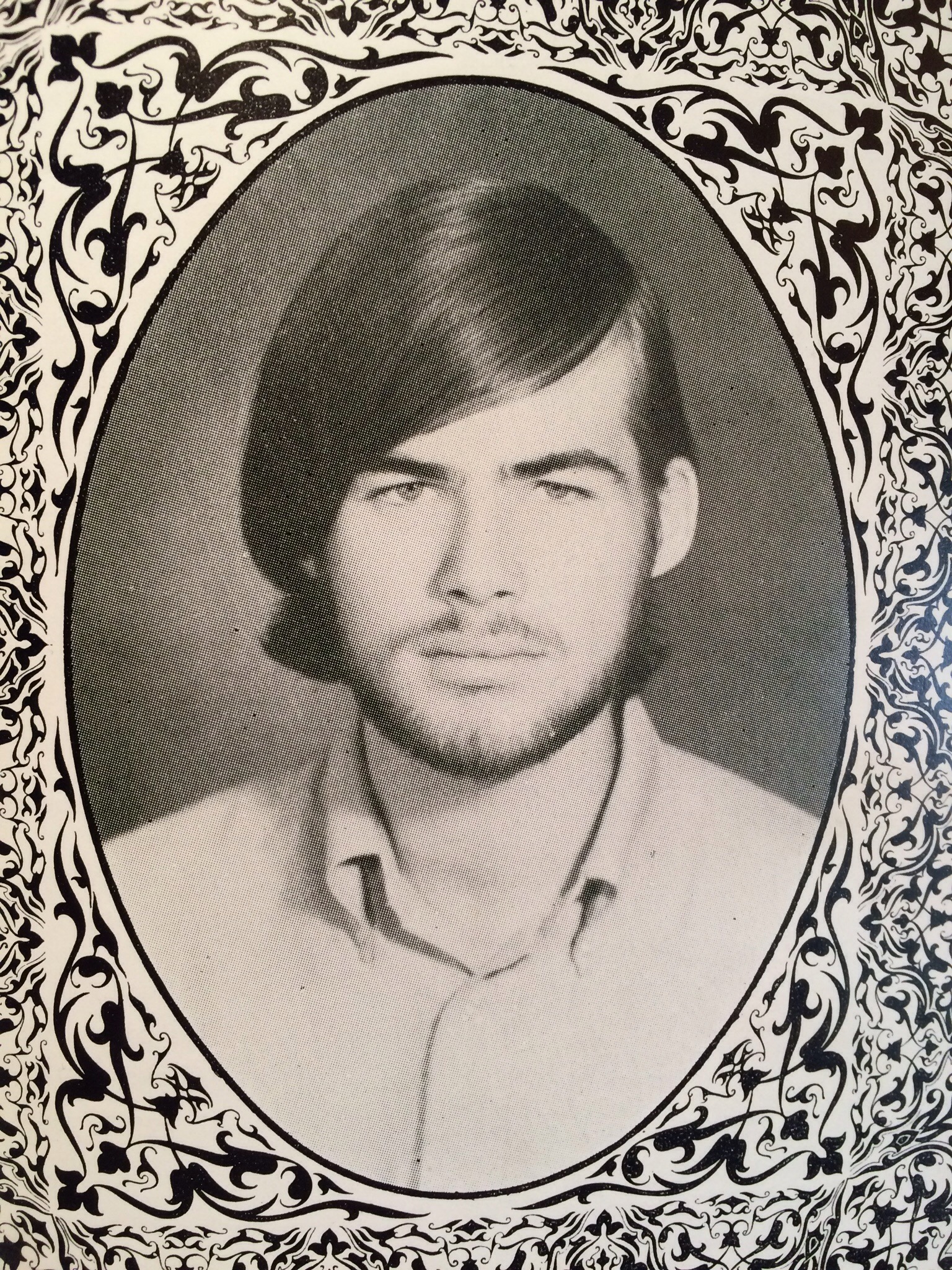
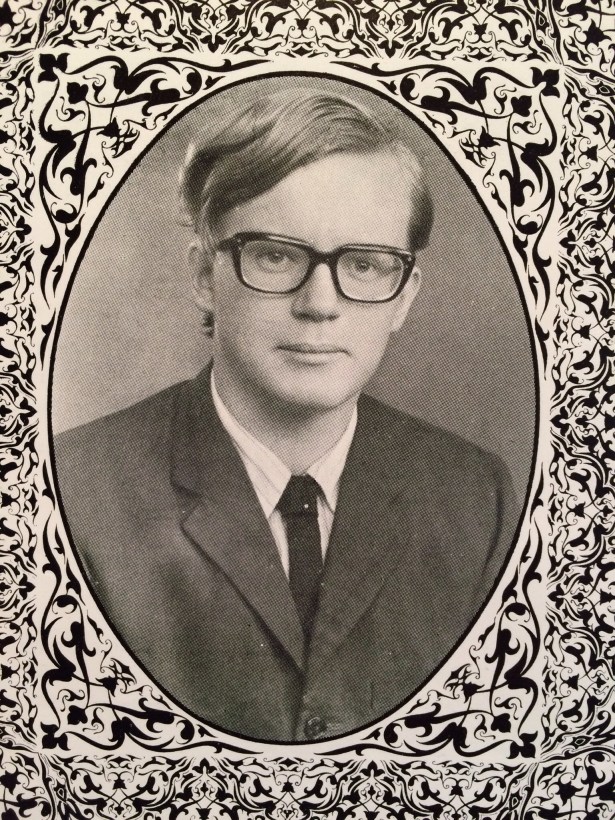
Here are a couple of the 18 year-olds at the school, to show you my first influences. One the cusp of two generations: the conformist and the hippy.


Primary School

There was a brief blur of skirts and sweaters from Mrs Herring and Mrs Snowden at my primary school in Luton. I can only imagine that they reflected the early seventies. And then I was off to my prep school. Up until that point I’d worn my own clothes in Pakistan and the usual kit at Maidenhall (a maroon and pale blue tie comes to mind). 

Preparatory School

Bedford School was very different: I was taken up to Selfridges to buy grey jackets and shorts. I’m not sure who was more excited: my parents or me; I just remember going round to a neighbour in our little cul-de-sac at the bottom of Dallow Road, bursting to show off my new uniform. I must have seemed such a stuck-up little prig to my friend Michael, the son of a Vauxhall Motors worker. In fact, our financial circumstances weren’t that different; it was just that the government pays its overseas civil servants, of whatever grade, to send their children to boarding school.

By the way, my daughter was equally proud of her school uniform. Before she’d turned four, she was kitted out in a grey pinafore, brown leather mary-janes, a pale blue polo neck and a straw hat. 
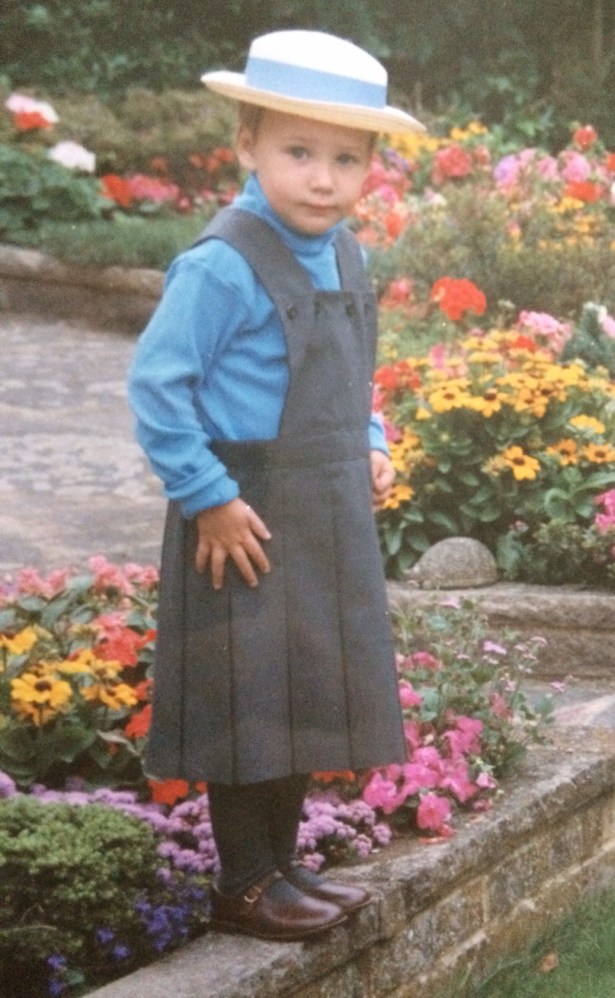
  
Wilful and bossy even at that age, she made me parade her round London in her special new clothes. We are alike in many ways.

Class and Conformity

Clothing denotes class: be in no doubt. And I turned up in the wrong grey suit. Everyone else’s came from Beagley’s, the school outfitters; mine, though more expensive, was ‘not one of ours’. Nor did my royal blue t-shirt and light cotton shorts match the rugby jerseys and heavy rugby shorts that every other boy wore for football. My clothes subtly marked me as an outsider when all I really wanted to be was deep inside the camp. 

My teachers, male now, wore tweed jackets and grey trousers or somber suits, sometimes in three pieces. And they wore gowns; sometimes hoods (for special occasions). Some of these men had History: my form master had been a rubber planter in Burma, then led his troops against the Japanese there. My house master had spent the war in Changi and died in the summer term of my second year at the school. My Latin master had fought in the desert campaign and had lost the use of his right arm (his handwriting, though legible, was marked by the war).   Their tweeds, gowns and suits particularly stand out in my memory. As for the rest, PE teachers wore smart track suits, most science teachers wore white jackets and the D&T teacher had a blue coat for the workshop. We all had our uniforms, which showed where we fitted in. 

My uniform changed over the years: at twelve, we finally got to wear long trousers; at fourteen, grey suits and shirts gave way to navy suits and white shirts. 

  
Looking smart in navy and white.

Coincidentally, this became my armour of choice almost thirty years later. I could go on for far longer about clothing and conformity (this applied equally outside school, as we vied to outdo each other to fit in as punks, mods, greasers, indie kids or potheads) but I have to buy Christmas cake ingredients.

Performance 

Dress is performative; much of my life at that time was a performance. My first play was aged six, in Pakistan; at Bedford I clocked up fifteen plays. One performance sticks in my mind: I played the Headmaster in Unman, Wittering and Zigo, the stage version of a very unnerving film starring David Hemmings. I was first on. The stage in the Great Hall, a vast space on which Malcolm McDowell appears as Flashman at the opening of Royal Flash,  was empty except for the two of us: the Head and the new teacher. In front of us was a scary sea of parents, pupils, relatives and teachers. Hundreds of eyes. In that moment I was equally terrified and exhilarated. I get scared before I perform, but I was prepared: I had learnt my lines, we had rehearsed and, above all, I was dressed for the part. I swept to the front as the lights went up, looked out into the darkness, arranged my gown as I had seen our Head do so many times and began to speak. And as I spoke, I thought, this is my stage, this is my audience, this is brilliant. 

And I wonder how I came to teach…

  
This is Adrian Barlow, the young teacher who taught me to act as well as to love English.

Difference

I will conclude my review of my own school days with three examples of significant difference. 

Firstly, the subtle signs of rank: monitors could wear different coloured sweaters. They could even wear coloured waistcoats. And they wore brown shoes, in contrast to our black ones. They could walk across the grass; we had to walk round. And, though they could no longer beat us, they could make our lives miserable. No wonder John Fowles hated it (I think it suited Paddy Ashdown).
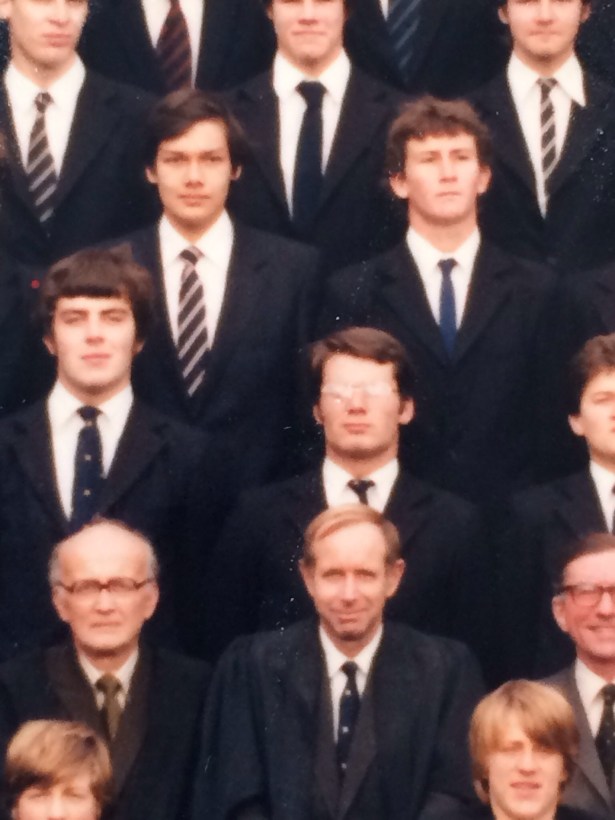
  
From the Head at the bottom to ordinary schoolboys at the top.

Destined never to hold any rank and, in fact, to be expelled, I didn’t get to dress up like this. I now wear brown shoes with my suits, as much in deference to the school dress code of my youth as to thumb my nose at ‘City’ conventions, of which more later.  

Secondly, the sign of sporting accomplishment. At twelve or thirteen, a little blue or red ribbon on the lapel indicated all-round prowess; unable to catch, kick or throw a ball and possessed of two left feet, I had no such ribbon. Further up the school, there were ties, blazers, scarves, even white trousers if you rowed. Badges, blazer trimmings and tie stripes spelt out our accomplishments. Bedford was, above all, a sporting school: the head of Geography was the England hockey captain for starters. 
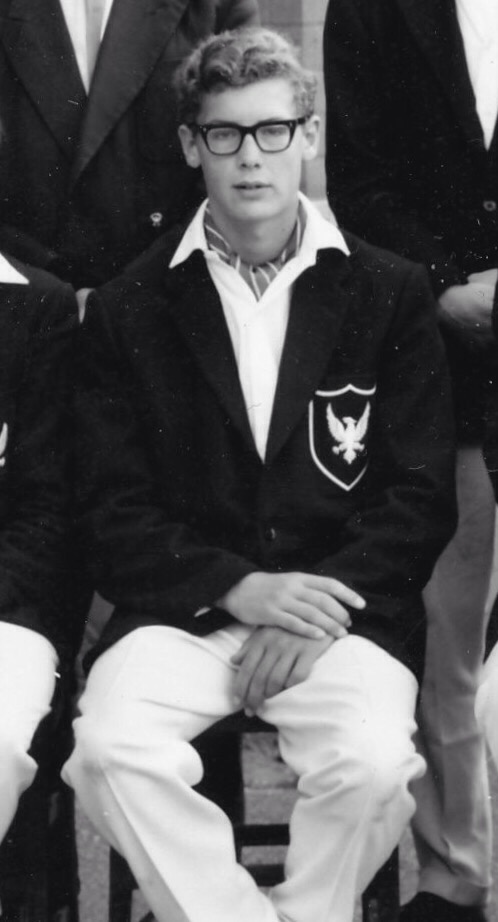
  

This picture is from the sixties; it could easily have been twenty years later.

No one wore different clothes for being clever, so I decided to become good at sport. One avenue remained open: there are no balls involved in rowing, and I have very long levers. I am also extremely determined, when I put my mind to it. So I trained and rowed fourteen hours a week, partly because I loved it but partly so that I could earn the tie, the blazer and the scarf. To this day, I treasure my “Trial Eight wrap”, a huge blue woven scarf with three stripes: emotionally, it is more important to me than my degrees. I can do ‘clever’; ‘sporty’ was a true struggle. 
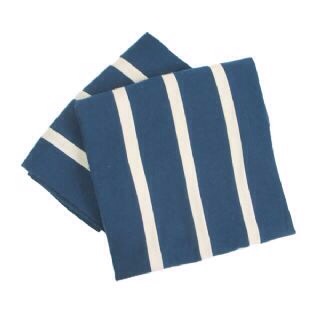
 
The wrap I so coveted. 

Finally, for one teacher, clothing showed outright resistance. ‘Bunny’ Warren wore jackets, but sometimes they were motorbike jackets. He wore trousers, but they were jeans, soiled with grease from the motorbike he occasionally rode across the lush playing fields. His hair was over his collar, his face stubbly long before ‘designer stubble’ became a thing. Bunny wasn’t there for long, but he shone, in all his short, greasy, biker chic. 

I left school with a strong need to fit in, a powerful desire to compete and excel, and an equally strong and sometimes self-destructive streak of idiosyncrasy. In my next instalment, I will address conformity and transformation at university.

I’m okay with Ofsted

My last post might imply that I have a problem with Ofsted; I don’t. For a start, I don’t believe I’ve been in the teaching profession long enough to judge. But I’ve done a few other things along the way.  Here are some thoughts.

Just do what you say you’re going to do

Early on in my consulting career, I became the company’s quality manager. In order to win public sector work, we needed to give our government clients some assurance of the quality of our work. BS5750 or ISO9000 was a badge that gave some assurance. I took on the role as a development opportunity: I am naturally disorganised and hate unnecessary procedure and paperwork, so I wanted to learn how to do it properly. It was a bit of a farce. We had procedures, statements of how we did things and how we assured ourselves of the quality of our work. And for 99% of the time, we ignored the procedures. Then, with an inspection visit looming, we’d rush around and do a year’s paperwork in a week. No one got much sleep but the files looked convincing and we retained our accreditation. A few years later, on someone else’s watch, we saw the light: why don’t we just be brilliant, encapsulate that practice in our procedures and be held to account for what we actually do? It felt great. It felt easy. Above all, it felt honest.

What happens to a child lives with the adult

In 2003, I set up and managed the procurement stage of a project for DfE to create ’embedded learning materials’ in basic skills for adult learners. Numeracy, literacy and ESOL in the guise of training in trowel trades, horticulture, healthcare… One of our target audiences was the prison population, people who’d left school unable to read, write or calculate. A shocking and shameful percentage. I was new to education, but the subject knowledge experts told me that part of the reason for these materials was the failure of some schools in the 1970s and 1980s to teach basic skills. True or not, this shocked me. I hoped the materials helped a little, but it made me think, why had this happened? And if they were culpable, how had schools got away with it?

Assurance or poker?

In 2007 I led a review of the risk, management and budget for the programme to establish the 2012 Olympic and Paralympic Games, on behalf of the Secretary of State for Transport. As a co-funder of the programme, the department was liable for a proportion of any overspending, straight out of its budget for infrastructure projects. The minister, understandably, didn’t want to be stung for hundreds of millions of pounds. Without breaching any confidentiality, what struck me was the game of cat and mouse we played with the programme and its sponsoring department. Meetings with the Treasury and the Permanent Secretary of the Department for Culture, Media and Sport were exhilarating; one or two of my face-offs with Dennis Hone left me with real admiration for him but vowing I’d never play poker with him. Over three months, we reviewed, we reported, Cabinet met, the Games happened and there was no apparent overspend.  Our review was deemed a success, though I believe we never really got to the heart of the programme.  That review was one of the triggers for me to become a teacher: if I could rise this high and still feel I wasn’t making a difference, I needed to change my game.

“Who turns up”

I was also accredited as a leader of Gateway reviews for the government’s high risk projects. After a career in poaching, I had turned gamekeeper. To be a reviewer, you have to be a practitioner; to lead teams, you need to prove your experience and your capability. What matters with a Gateway review is “who turns up”. The seal of confidentiality is vital and has been fiercely defended, of which more later. You stand or fall by your reviews, as the projects you scrutinise – and the teams you lead – provide feedback on your performance. I loved the role, which was all too brief because I left to become a teacher.

My experience with Ofsted has been limited. A few near-misses, an observation from Her Majesty’s Inspector and a great conversation. Here’s a flavour of it.

Stress can kill

Before I started my teacher training, I observed at a school which had recently been inspected. The staff were devastated: one of their young colleagues, exhausted from the effort of preparing for the inspection, had had a serious asthma attack and had been taken to hospital. While I was there, the decision had been taken to turn off her life support machine. “Had she been suffering from any unusual stress?” the consultant asked her colleagues. The Head, a gentle man who appeared to be trying his hardest, lost his job once the Ofsted report became public. I decided that maybe I didn’t want to be a Head.

Just shut up, cut up and stick up

On my first teaching practice (observation at that stage, not teaching) I was told by my host teacher to shut up, cut up and stick up. Suddenly, laminated learning aids appeared, Romanian children who’d been impoverished of any EAL support in the classroom were surrounded by vocabulary, lessons sparkled and differentiation abounded. No one smiled in the staffroom; laughter had a bitter edge to it. Everyone seemed very tired. I decided that I would try to avoid being inspected if at all possible.

I have other stories, experiences of schools’ reactions to Ofsted visits – but I’m sure all my colleagues across the profession do too. I have felt the huge pressure to make everything perfect before an Ofsted inspection: it makes the stress of my previous career seem trivial.

HMI – professional, constructive and clear

I’ll turn to my direct experience of Ofsted: a recent HMI visit. I did nothing special, barring being a little bit quicker in putting up a display (and that was only because I was childishly proud of the children’s work). For my observation, I taught a maths lesson, with children who lack confidence in the subject. Nothing special: it had always been in the plan.  That day, they sparkled; the previous week, they hadn’t. But in that lesson, the inspector got to see my pupils being excited about shape, participating in a confident dialogue with me and then applying what they’d learnt. I know I can teach outstanding lessons; I can also occasionally teach some real duds. Thank goodness this was a good day. Later on in his visit, the inspector spoke to a small group of the staff, gently encouraging us to express our opinions and asking incisive questions. I think his subsequent inspection letter was spot on.  His intervention was professional, constructive and clear: if Ofsted is about “who turns up”, he was a great ambassador.

Ofsted, NUT and a bit of common sense

As our school’s NUT rep, I recently attended a training day. Mike Sheridan, Ofsted regional director for London, spoke to us. He drew a clear distinction between what Ofsted want to see and what some schools still seem to think inspectors want. The ‘myth busters’ have been widely circulated now, though not widely enough for my liking. It is published in the school inspection handbook, here. Mike seemed eminently reasonable, not least because he has walked in our shoes and is married to a primary school teacher. I felt comfortable with what I heard, and we gave him some food for thought: why not have a class teacher in every inspection team? Their proximity to the ‘coal face’ would give them greater insight and empathy than their SLT peers might have. It would, we thought, create balance. I’d be interested to hear what others think.

And finally…

I ended my secondment to HM Treasury as manager of the Gateway brand. It was a temporary post: as the agency for whom we all worked squirmed under the hostile scrutiny of the Chief Secretary to the Treasury, as budgets and headcount were cut, and as the vow of confidentiality for Gateway reviews sustained attack after attack via FOI requests, I was charged with reviewing the future of Gateway: its nature and reputation.  This is what it looks like these days.

At stake was a simple process that depended on a few things: its very simplicity and clarity, the experience and capability of the reviewers and the confidential nature of the review. In summary, reviews were conducted for the highest accountable individual on the project or programme – the SRO, a senior civil servant (or, in one of my reviews, the major general) whose career was most threatened if the endeavour failed. We spent three days on the review. We could demand access to any person, document or meeting we wanted: everything was conducted in confidence. During the review, we prepared our findings and recommendations, discussing them with the SRO. The emphasis was as much on offering constructive advice on how to deal with the main issues we had found as it was on our forensic work: that’s why it was important that we were practitioners.

At the end of the review, we presented our report to the SRO, warts and all. No senior person likes to be told that their pet project isn’t right (though the gravitas, humility and receptiveness of the major general, still in battle dress after his flight from Afghanistan, really impressed me). And there it stayed, for the SRO to put right. The great value of this process was the honesty it prompted from project teams. Knowing that their concerns could be voiced in confidence, they told us the truth: through us they could ‘speak truth to power’.

But that wasn’t entirely all. We took out reports back to the Treasury, which maintained an overall view of the risk profile of government projects and programmes. The severity of the issues on a project or programme determined the timing and nature of our next steps: routine review, repeat review or intervention. And if, on our next visit, the project hadn’t acted on our recommendations, the Prime Minister got to hear about it.  No one wanted to be on his ‘to do list’.

Finally, I’d like to reflect on the future of scrutiny, assurance and accountability for schools, in a personal, as-yet relatively uninformed and exploratory way.

I am delighted to hear that Ofsted is taking inspections back in-house; I felt uncomfortable with the idea of Gateway being franchised out to extended organisations. Corporate commercial interests don’t sit well, in my book, with the common, public good.

I’ve gone on at length about this subject because I am comfortable with scrutiny from Ofsted. I’m a parent. I’m a teacher. I have been a governor. Schools need to be held accountable for the work they do with our children (I won’t extend that to ‘outcomes’ because true accountability would have to come with a greater degree of control over the variables in our pupils’ education).

I would like to see inspections that:

  • offer a two-way feedback process, where schools can comment constructively and confidentially on the approach taken by inspectors and feel that their feedback is acted on in the subsequent selection and further development of inspectors;
  • report confidentially to the governing body of the school and only ‘go public’ if the governors are unwise enough or unable to act on the recommendations of the review;
  • exercise strict quality control (if they don’t already) over the conduct and capability of inspectors, who should include experienced classroom teachers.

I would also like to hear that schools:

  • feel able to be honest about their needs and shortcomings;
  • instead of second-guessing some draconian approach that will please Ofsted, subscribe to the principle of “Hey, why don’t we just be brilliant, encapsulate that practice in our procedures and be held to account for what we actually do?”, as the Wroxham School seems to do, and (if it works for their pupils);
  • are publicly celebrated for their honesty, vision and courage as well as their consistency and prudence.

To summarise, our children’s education is too important to go without scrutiny, and education is too important to be subject to hostile publicity with no incentive for honesty. Let’s not play poker with our children’s futures.

Why I will neither label nor be labelled

I refuse to label children. I have been happy to accommodate, to compromise what I thought were immutable principles during my brief career as a teacher: some of them were, frankly, naive. But I won’t replace NC levels with a “year-equivalent” statement in my pupils’ books. 

I will assess them according to well thought-through descriptions of what we should see in a year group. I will share those descriptions with pupils, expressed in language that they can understand and with examples that are meaningful to them. I will explain to my pupils that I need to have evidence of this feature or that skill. I will tell them that unless I see examples, I can’t vouch for their ability to use a particular aspect of Maths, say, or English. And I will tell them, joyfully, what I can see.

Together we will agree what’s most pressing for them to work on. Job done, targets set – and then I’ll plan, teach, mark and evaluate accordingly. I’ll be there to support them; I’ll celebrate their successes; I’ll be on their backs if they’re taking it easy. My school agrees with me: that’s one of the reasons I like them so much.

It’s how I used to manage and help to develop people. It’s how I was accredited as a management consultant. It’s how I used to assess project managers. It’s how I qualified as a teacher. 

It’s how I taught swimmers at a highly competitive swimming club. They had their galas to tell them if they could win or not; I was there to teach them HOW. We used to say, “If you look into another lane, you’re likely to lose” and always emphasise that what mattered was their Personal Best. Ask any competitive swimmer: the medals fill their drawers and hang from their shelves; the PBs are their over-riding obsession.

Labels may work for some pupils; they didn’t work for me. I thought I was rubbish at Maths and gave up on any hope of studying sciences (I love numbers and their patterns and have now overcome my fear of them). I thought I was “the cream of the cream” in everything else at 14 and coasted until I crashed into some mediocre GCEs and A levels. 

And then I learnt to love learning for its own sake. I craved my tutors’ feedback, monopolised them (choosing courses where I was sometimes the only student in the whole of London University). Through tough, challenging feedback from tutors such as Professor David Carpenter, who told me in no uncertain terms how flabby my essays were, and critical encouragement from Charles and Anne Duggan, I achieved a near-perfect First.

The grade itself was the worst part of my degree. Once again I was labelled. In those days, far fewer students were awarded firsts. My mates, with their two-ones and happy Desmonds, looked at me strangely. I hadn’t a clue what it meant, what it made me or what I should do. So I started a PhD because that’s what you do when you’re brilliant, isn’t it?

I failed. For a year I pretended that I was able to conduct rigorous research and that I would find an original idea to pursue. I was too lazy, too fond of coffee and company, too unfocused. In October 1987 I found myself stacking shelves in a shop in Covent Garden, on my way up a very winding staircase towards a career.  I will write about this, in a separate post.

Labels confine. Labels don’t motivate, any more than glittery stickers. They are the flip side of the ‘growth mindset’ and even less evidence-based than critics suggest Carol Dweck’s work to be. 

I welcome Ofsted’s clarification of its approach. Labelling a teacher based on an observation is neither sensible nor practical. I would argue that publicly labelling a school ‘inadequate’ or even ‘outstanding’ is a dangerous thing to do. The recent suicide of a Head Teacher after her school was judged inadequate, following on from Helen Mann’s suicide in 2013 as her school faced losing its outstanding status, should have us asking, is there another way of improving our children’s outcomes?

On International Men’s Day

I am a late and hesitant convert to the idea of International Men’s Day – mostly because, like White History Month, it’s arguably celebrated all the time.

Here’s why I think it’s important:

1. Uncontrollably angry or severely depressed boys and men need help and NEVER to be told to ‘man up’ or ‘grow a pair’, or they may harm themselves and others.

2. Men need to feel able, as well as obliged, to play an equal part in relationships, especially where children are involved.

3. Men shouldn’t feel it is in any way demeaning to stand shoulder to shoulder with women in the workplace or, heaven forbid, slightly behind or beside them.

4. Each of us is made up of genetic material from a man and a woman – in fact, countless men and women. We should examine and celebrate the characteristics of individual men in our make-up. Perhaps especially where they don’t fit with the crushing conformity of ‘maleness’.

5. Boys – and men – should be reminded that they can be, become and behave as they wish (with an obvious emphasis on the positive) without fearing that it isn’t ‘manly’.

For me, International Men’s Day is a matter of remembering power, responsibility, potential – and vulnerability. We’re all human, after all.

27 January 1945

Roza_Shanina

This is loosely based on the life, words and death of Roza Shanina, who was killed seventy years ago.  It’s my response to the #500Words competition.

Breathe slowly. Forget the cold creeping through your chest, belly and legs. Steady your arm, adjust your eye, still your breath and squeeze. No, stop for a moment. How did you get here, crawling across frozen Prussian soil, sliding across black ice, pushing through powdery snow?

The cold beneath you is no stranger.

It takes you back to the crunch, crunch, crunch of your steps on the way to school across the quiet Siberian permafrost, eight miles each way, your breath steaming, your eyes streaming and your skin stinging, despite your mother’s best efforts to wrap you warmly.

You long to be warm again.

Back in the crowded Archangelsk kindergarten: hugged by other people’s laughing, busy children; singing made-up songs with them; helping them to build imaginary castles and paint outlandish animals; telling them the stories your father used to tell you at home, beside the fire.

A fire flares up to your left.

Fire became your enemy’s weapon. You waited for the raids each night, watched the buildings burn and did what you could to fight the flames. And then the enemy killed your brother, at Leningrad. Mikhail, who’d marched ahead of you on the frozen walks to school.

You wait for the man to move.

You couldn’t just wait and watch others die. At first, the recruitment officers had no intention of letting you join up. After all, what could a sixteen year-old girl do? But you were determined to do something. After hours on the ranges and weeks of basic training they took you on. The army needed snipers.

You mouth the instructions you learnt at the academy.

You didn’t just pass; you excelled. They wanted you to stay and teach but you wanted to fight, for the happiness of others. How could ‘happiness’ be a noun with no plural? Well, if you had to die for this common ‘happiness’, then you were braced for it.

Your shoulder aches.

Two small, scarred holes show the entrance and exit of a sniper’s shot. There’d been no more than a sharp, cracking sound and the feeling that you had been scalded with something hot. Last night you dreamt that someone would score a second hit, in the same place.

It won’t be long now, not since all but six of the seventy-eight in your battalion are gone. You’d rather be safe, but something keeps bringing you back to the front line. It’s too late to feel afraid. They gave you medals for your courage, for fifty-nine ‘blacks’, sometimes two at a time. But what have you actually done? No more than any other man.

A man groans beside you. The wounded, dying officer you’re sheltering is unaware of the fatal danger of any noise out here. He reminds you of Misha, who loved you, and you him. There’s no solace for you now, but you comfort the man with a song: “Oy tumany moi, rastumany.” O My Mists. You lower your sights and the world explodes.

Tree, lights, decoration

 IMG_0018.JPG

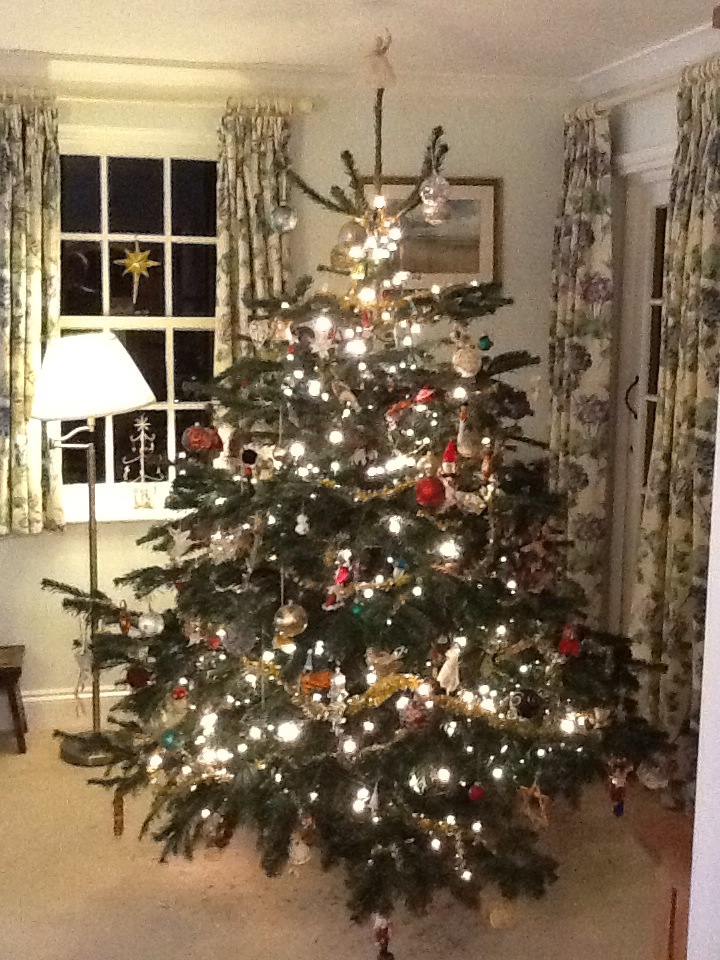
We bought ours yesterday. It’s a tradition: Ellie and I buy it. We look at the trees quickly, then impulsively choose one. So far, we’ve not been wrong: it’s just the right height, perfectly formed, thick and bushy.

It has to be bought from the same place: a garden centre in the village where Ellie was born. We used to walk up to the centre, then I’d walk back with the tree on my shoulder; now it’s a short car drive away, the tree jammed against the roof of the car.

I measure the approximate height of the room when we buy the tree, just as precaution: my height plus the length of my arm. This year the tree is a perfect height: I won’t need to saw any of the trunk away, nor lop its proud top.

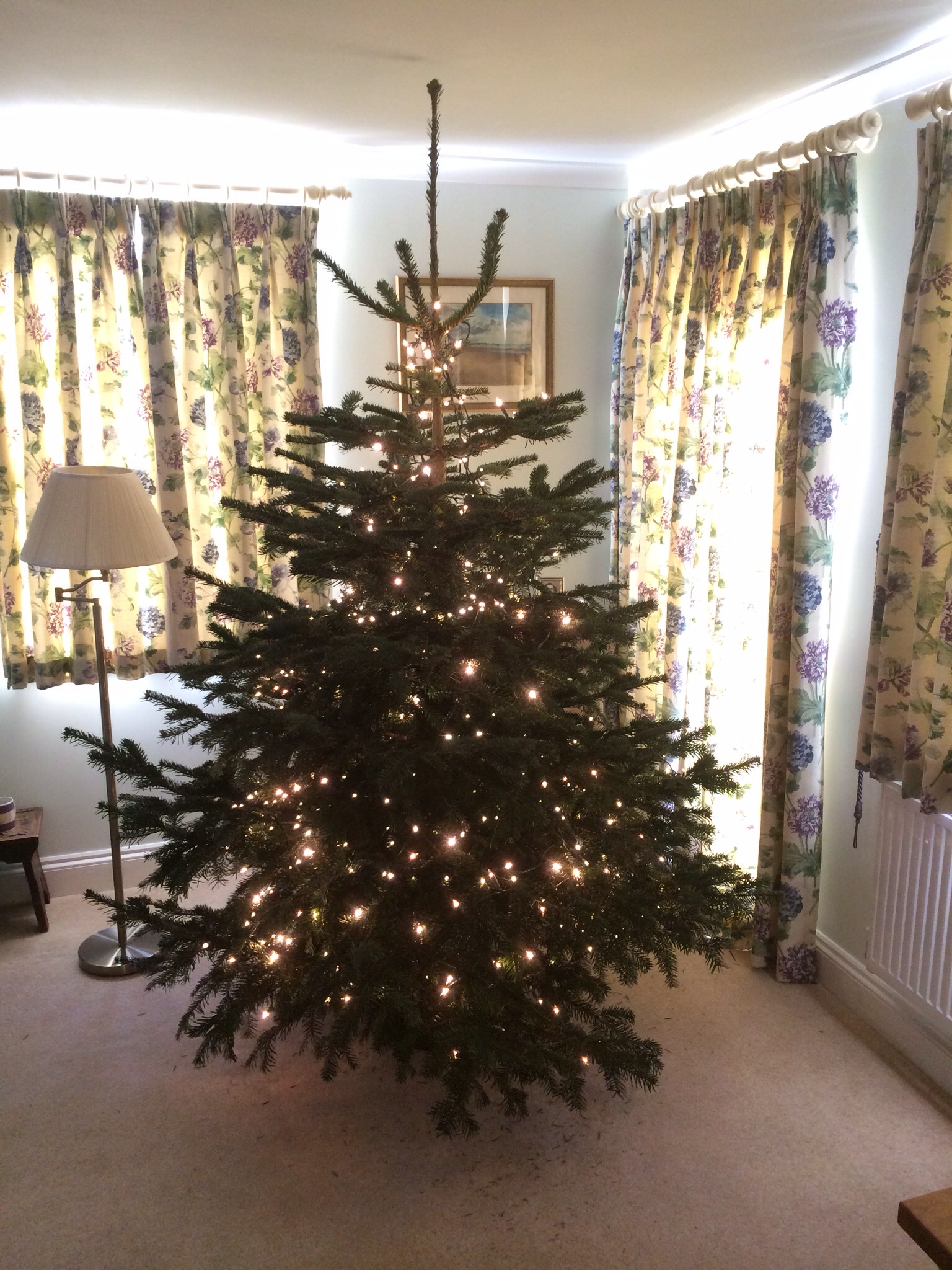
IMG_0022.JPGSo far, all we have done is to position it in the corner of the living room and wrap it in its garlands of lights. This is a job for me and me alone. Other fathers may attest to the need for solitude (and a soundproof door) whilst undertaking the task of unravelling endless ropes of lights; discovering that some don’t work; seeking out the bulbs that are causing the malfunction; foraging for the appropriate replacements; fiddling around to remove and replace aforesaid bulbs; gathering up each string of lights; walking them around the tree; placing them in the right position so as to cast the precise amount of light on the surrounding decorations; and readjusting them because the rest of the family have noticed that there are gaps in the coverage.

10:30am We’re all still in bed (it being the first Saturday of the holidays) but shortly the family will be downstairs, the Christmas carols will be playing softly, the mince pies will be warming in the Aga and we will begin the lengthy ritual of decoration.

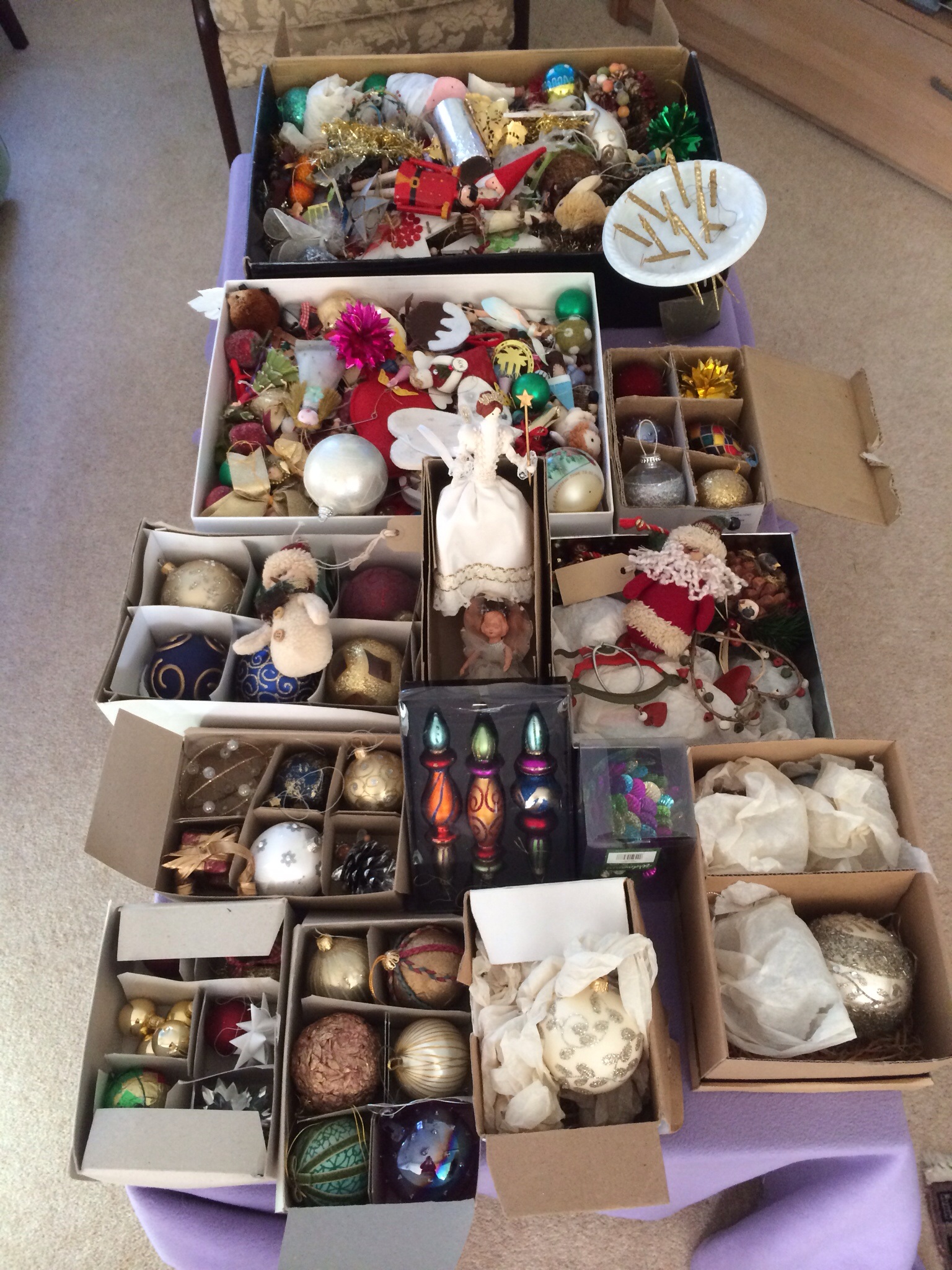
IMG_0020.JPG12:30pm Now I have laid out the decorations and am planning my escape to Waitrose while the children (they’ll always be children to me) prepare to find places for the many hundreds of baubles and the metres of tatty tinsel that we have acquired over the years. Pippa has inherited family decorations that date from the 1950s, and since then we have been making or buying decorations each year.

Every time Ellie came back from her nursery or her primary school with another crudely glued, glittered or painted angel, Father Christmas or star, it would be added to the collection. The Romans had their lares or household spirits figurines that they kept near their hearth; we have Christmas kitsch, as you can see…

IMG_0038.JPG5:30pm Now the tree is fully lit and decorated. Ellie has performed the final ritual: placing the fairy on the top. The first time she did this, she was a little over a year old; gradually, my role has changed from holding her in my arms to securing the chair as she reaches out with her nineteen year-old arm. Time passes; traditions linger.