If you haven’t already read it, read it with me. Here is what John Williams has to say about William Stoner.

If you haven’t already read it, read it with me. Here is what John Williams has to say about William Stoner.

This morning I am doing something untidy, discursive and perpetually inviting, with Alan Bennett’s ‘The Uncommon Reader’. I invite you to do likewise.
This is one of the recipes I use to ameliorate the effects termly assessments (the other two being Mary Berry’s Aga shortbread and
Judges chocolate brownies).
It’s not to be made – or eaten – without care. Hazardous and highly calorific, but it appeals to the Scot in me and reminds me of the lovely crunchy fudge my mum used to make.
The grandmother of one of my former pupils approached me for the recipe, saying that her granddaughter pined for it.
With no more ado…
Scottish Tablet is not, as it sounds, something to write on; it is a sweet Scottish, fudge-like, extremely sugary sweet. Tablet contains sugar, butter and condensed milk and, as you can see in this recipe, it is easy to make.
A warning: this recipe reaches very high temperatures, so ask Mum or Dad to make it, then go and play outside.
Talking to Mum or dad now: for safety’s sake you need a large pan: the Scottish tablet reaches a rolling boil and sometimes, if you have the heat even a little too high, the mixture can swell up very quickly and boil over. The pan should at least be a heavy based 4-pint saucepan, but even that will hardly be big enough if you try to cook all the ingredients at once. I made mine in three batches.
Preparation Time: 5 minutes
Cooking Time: 30 minutes
Total Time: 35 minutes
Ingredients:
1 pint/500ml water
8oz/225g butter, chopped into pieces
4 lbs/1.8kg super fine/caster sugar
1lb/450g of condensed milk
Preparation:
1. Butter a 12″ x 4″/30cm x 10cm or 7″/18cm square tin.
2. In your saucepan (see note above) heat the water to a low simmer then add the butter. Stir until melted. Add the sugar and stir until all the sugar has dissolved. Raise the heat to high and bring the sugar to a hard boil for 5 minutes (the mixture should boil really fiercely which helps to reduce the liquid and colour the mixture) stirring all the time to prevent the sugar from sticking and burning. If you have a thermometer take the temperature to 120°C/ 250°F (also known as hard ball stage in sweet and toffee making).
3. Once the sugar is boiling, slowly add the condensed milk – TAKE CARE – the sugar is at a very high temperature and may splatter. Stir well then lower the heat and simmer for 20 minutes. The mixture will bubble and resemble a moon crater, but don’t be put off, keep cooking. The mixture will also start to slightly darken.
4. After twenty minutes or once the mixture is visibly thickened, remove the pan from the stove and stir the mixture vigorously for 5 – 10 minutes.
5. Pour into the greased pan and when the tablet is cool but still soft, cut into 1″ squares. You can even put the pan in the freezer to make sure it is completely cold.
6. Wrap in greaseproof paper and store in an airtight tin.
I awoke to find a quotation from Tony Porter on my iPhone.

I won’t put the link to his TED talk here: if you want to know more about what he has to say on the topic of how we raise boys, search him out.
Here is an article from the Independent that explains the benefit of reading fiction .

Do I need to add anything?

This is interesting. Professor Andrew Pollard, teaching guru, former member of one of the government’s expert panels (part of what the Secretary of State for Education calls the ‘Blob’) and one of my influences at the Institute of Education, talked to us about education in Finland.
As you’ll see from this video, they do something right there. But Professor Pollard passed on a warning from Finland’s Education Minister, “Don’t think you can just replicate this. It’s uniquely Finnish.” From which I infer that this has to be a ‘whole society’ thing.
Remember July 1991? My wife and I do. We spent the two weeks of our honeymoon in a damp fisherman’s cottage in Mousehole. The month was noted for its blazing sunshine; not in Cornwall.
Why on earth had we picked the place? Because we’d had such wonderful childhood holidays there, and had forgotten that those holidays had often been spent in rain-spattered anoraks.
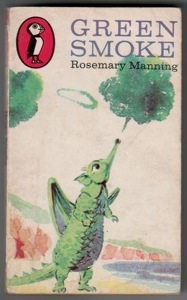
Green Smoke offers children – young and old – a taste of those holidays. Susan is spending a day on the beach at Constantine Bay when she sees a puff of green smoke. Shortly afterwards she discovers a dragon – R Dragon – and begins her adventures.
The first three books came out before I was born; the last of the four was published shortly before I left school.
Green Smoke (1957)
Dragon in Danger (1959)
The Dragon’s Quest (1961)
The Dragon in the Harbour (1980)
I strongly recommend these books to children who aren’t in a hurry to grow up. Old-fashioned and worth reading while curled up with an adult.
Rosemary Manning was a teacher – latterly a headmistress – who gave pleasure to so many children; I wish she had had more joy in her own life.

I am a sucker for all things Moomin. I was brought up with the books and loved losing myself in their world. Well, compared to early seventies Luton, it wasn’t much of a contest.
But Tove Jansson has much more to offer. For the young, there are the Moomin books; for the adults, there are her very good short stories (and one or two good novels).
And for children on the edge of growing up, there are two books: The Summer Book and A Winter Book. The former is a set of stories based around a little girl’s summers with her grandmother on an island; the latter a collection of short stories about growing up.
I lent A Winter Book to one pupil last year: she was ready for it. Most notably, she was ready for ‘The boat and me’, one of the most moving coming-of-age stories I have ever read. Here is an extract:
I go slowly, hugging the shore, into each creek and out round each headland; I mustn’t miss anything out because it’s a ritual. Now I’m about to see my territory from the sea for the first time, that’s important.
I pulled up the anchor-stone and rowed straight out into the path of the moon. Of course the moon’s path is lovely as a picture in calm weather, but when it’s rough, it’s even more beautiful, all splinters and flakes from precious stones like sailing through a sea set with diamonds.
And at that very moment Dad turned up…
If I offer your child this book, it’s because she or he, too, is ready.
Tove Jansson was the daughter of artists; she was herself an artist, as was her lifelong partner, Tuulikki Pietilä. She had an extraordinary life, and the worlds she created are as extraordinary. Her prose seems to reflect the pared back style of her art: no word is unnecessary, every word carries weight. It makes for hard reading at times, but it is always worthwhile.

 chorleywoodsix